What happens during a hijama session?
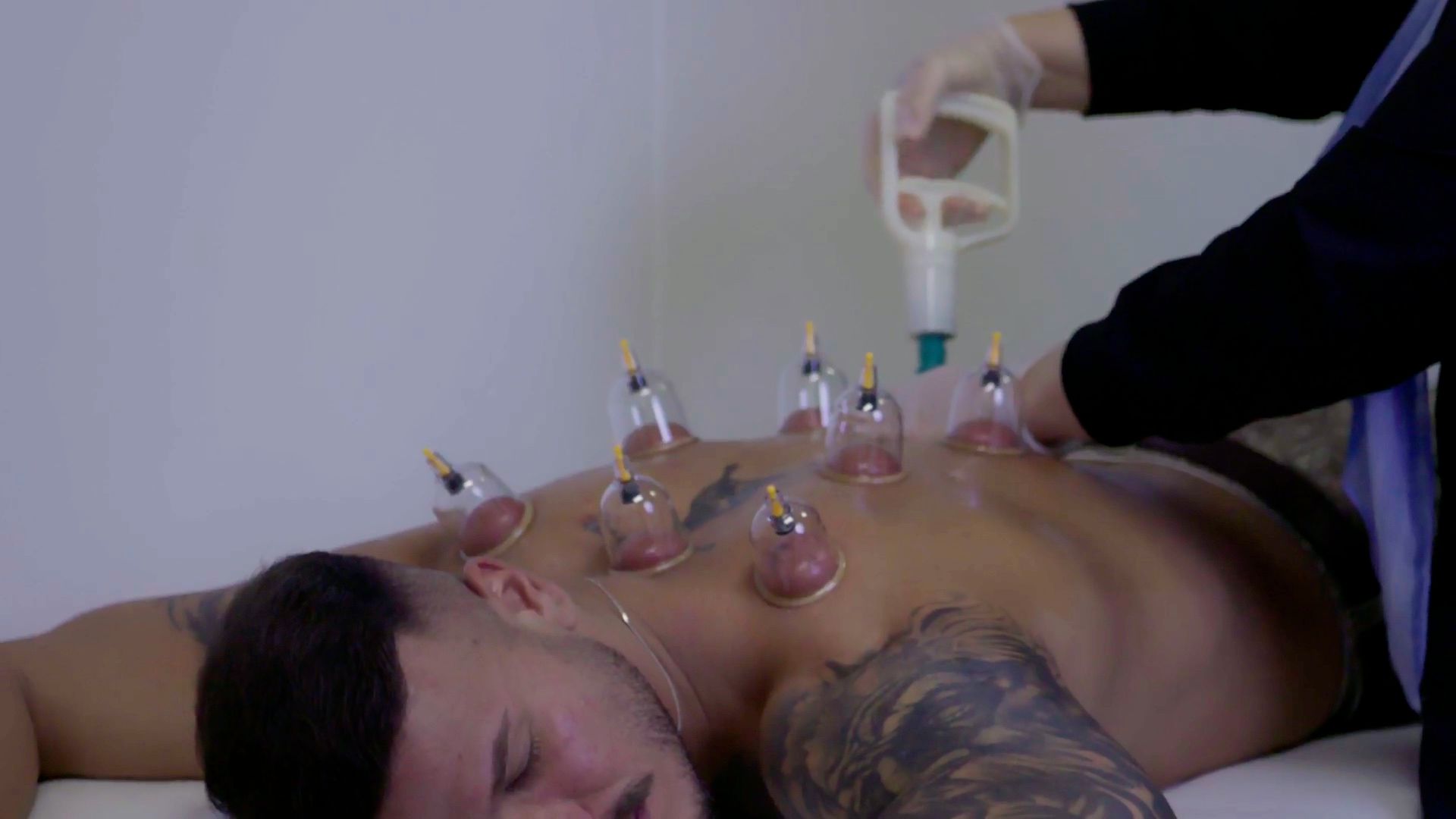
- Assessment and preparation. Your practitioner chooses the right cupping points for your needs, then thoroughly cleans and sanitizes the skin.
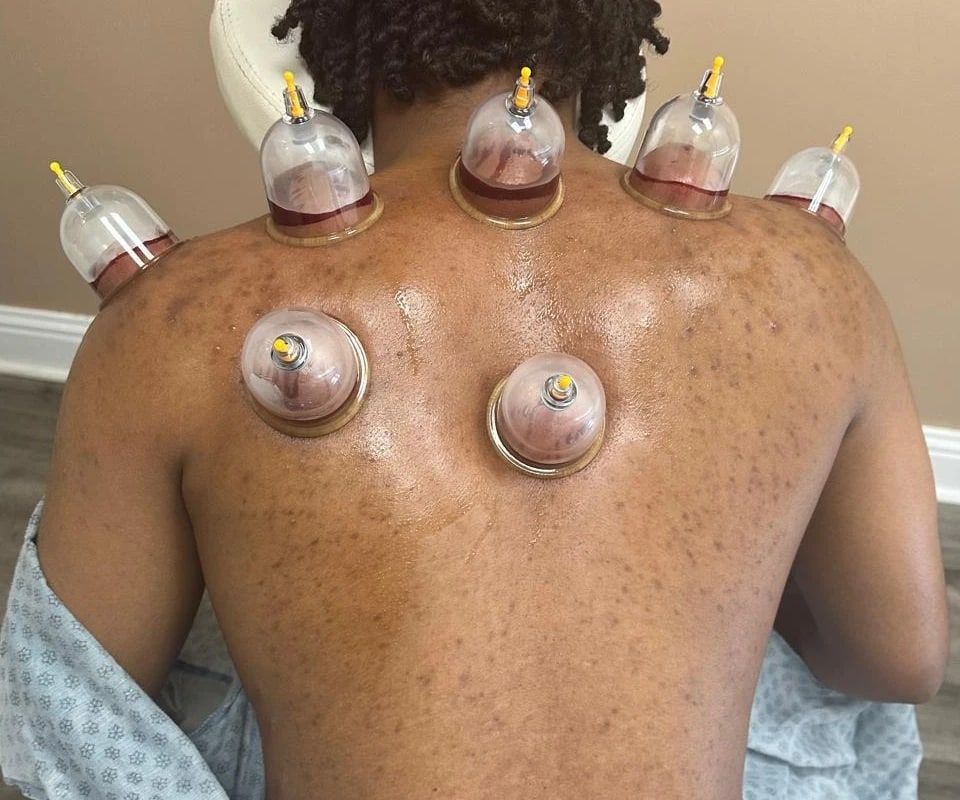
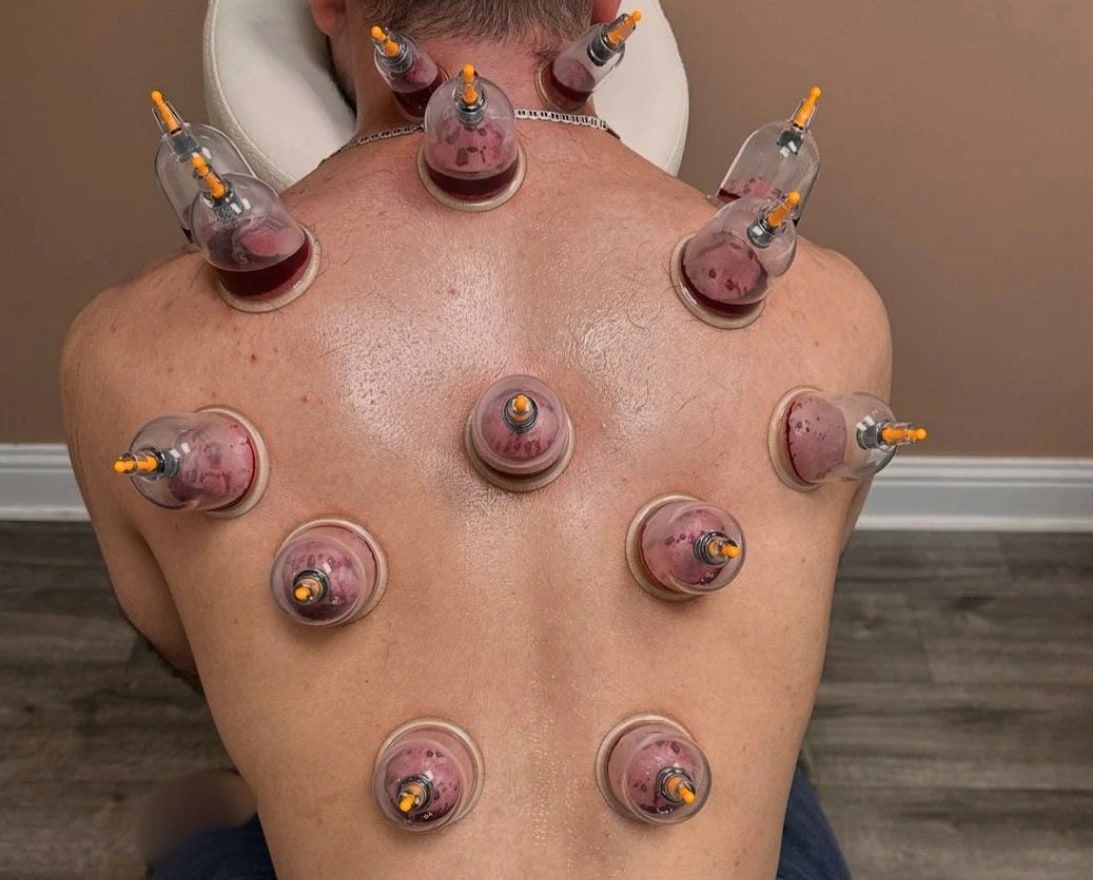
- Gentle suction. Cups are placed on the skin with gentle suction to draw blood to the surface and stimulate circulation. This first stage is the same as dry cupping.
- Controlled incisions. After a few minutes the cups come off, and small, shallow incisions are made with a sterile blade.
- Wet cupping. The cups go back on and draw out a small amount of blood.
- Aftercare. The area is cleansed and a natural antiseptic is applied to help it heal.
Every session uses single-use equipment, so each client gets a safe and hygienic experience.
How do I prepare for hijama?
- Don’t eat for 2 to 3 hours before your session.
- Take a shower before you come in.
- Wear loose, comfortable clothing that can tolerate contact with the oil used during treatment.
What should I do after hijama?
- Stay well hydrated to support your body’s natural detox process.
- Eat a light meal soon after your session, and avoid high-protein foods.
- Avoid showering, swimming or using a sauna for 24 hours.
- Keep the cupping sites moisturized with black seed oil to support healing.
- Light movement is fine 2 to 3 hours after, but don’t overexert yourself.
Why do people choose hijama?
It is a Sunnah. Hijama is a Prophetic Sunnah, practiced and recommended by the Prophet Muhammad ﷺ as a means of healing.
What research suggests. Researchers have studied cupping for circulation, muscle tension and pain. Some small clinical studies suggest it may help with certain kinds of neck and back pain, and many athletes use cupping as part of their recovery. The evidence is still limited, so we don’t promise specific medical results.
It doesn’t replace medical care. If you have a health condition, are pregnant or take medication, talk to your doctor and contact us before booking.
Who should talk to us before booking?
Hijama is not suitable for everyone. Please contact us before you book if any of these apply to you, so we can advise you personally:
- A bleeding disorder, or you take blood thinners or other medications
- An immune-system condition
- A skin infection
- Pregnancy, or you are menstruating
- Recent surgery
- Any other health condition that may affect whether hijama suits you